How to create a token or meme coin on the XRP Ledger
On the XRP Ledger you create a token by sending it from an account you control, with no smart contract. Set up an issuing account and a distribution account, turn on Default Ripple so holders can trade it with each other, open a trustline from the distribution account and send it the whole supply. Then blackhole the issuer, which locks the supply for good, and add liquidity with an AMM pool. A meme coin is made the same way.
執筆: Rho Black · · 約5分で読めます
What you are creating
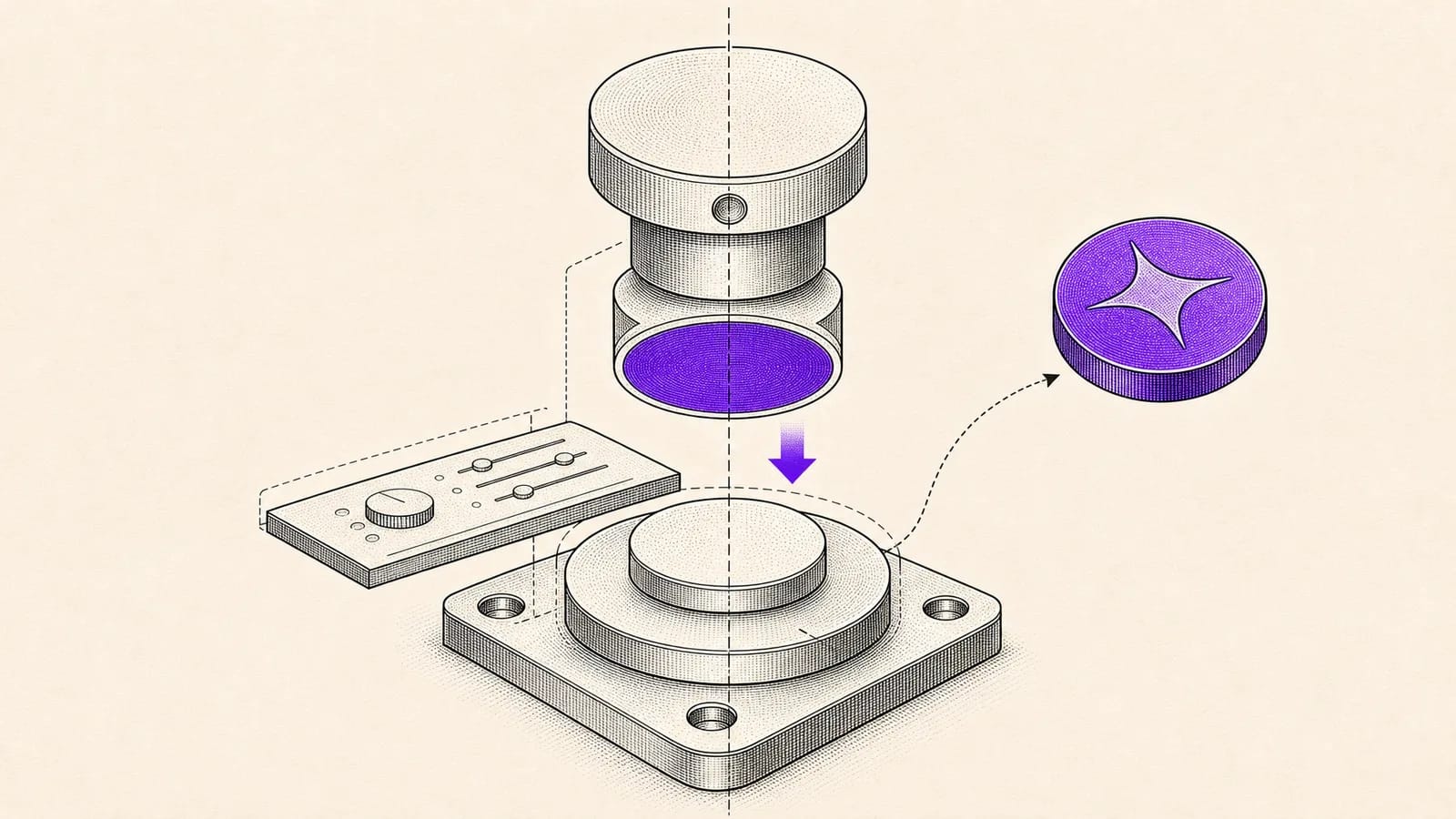
A token on the XRP Ledger is not a smart contract. It is a balance that one account, the issuer, owes to the accounts that hold it. The ledger records who holds how much, and its built-in exchange and AMM pools can trade the token from the moment it exists. You never deploy or audit code.
The ledger has two kinds of fungible (interchangeable) token. Only trustline tokens trade on the DEX and in AMM pools today, so use one for a meme coin.
| Feature | Trustline token | Multi-Purpose Token |
|---|---|---|
| Trades on the DEX and in AMM pools | Yes | Not yet |
| What a holder sets up | A trustline to your issuer | An MPT entry in their account |
| Live since | 2012 | October 2025 |
This guide covers trustline tokens. If you want to know where the newer type is heading, read what Multi-Purpose Tokens are.
What it costs
Most of the cost is XRP the ledger sets aside as a reserve, which you can recover later by removing what an account holds or deleting it. Only the pool creation fee and the tiny transaction fees are destroyed.
| Item | XRP | Kept or destroyed |
|---|---|---|
| Issuer account reserve | 1 | Kept |
| Distribution account reserve | 1 | Kept |
| Distribution account’s trustline to the issuer | 0.2 | Kept |
| Creating the AMM pool | 0.2 | Destroyed |
| Trustline for your LP tokens, the receipt for your pool deposit | 0.2 | Kept |
| Each transaction | 0.00001 | Destroyed |
That is under 3 XRP before liquidity. The XRP you put into the pool is the real budget: it sets how much someone can buy or sell before the price moves. Holders pay their own 0.2 XRP when they set a trustline to your token, so each new holder costs you nothing.
Use two accounts: an issuer and a distribution account
xrpl.org recommends splitting the job between two accounts, and most serious tokens do. Create each one in a self-custody wallet such as Xaman, and fund it with XRP withdrawn from an exchange.
- The issuer (the “cold” account) creates the token and should sign as few transactions as possible. Its address is the token’s identity: wallets, explorers and XPMarket tell your token apart from copies by this address.
- The distribution account (the “hot” account) holds the supply and does the daily work: sending tokens, funding the pool, paying airdrops.
A leaked distribution key loses only what that account holds. A leaked issuer key is worse until the supply is locked, because whoever has it can create unlimited tokens. Keep the issuer’s key offline, and use a fresh account for it that has never held anything.
Set up the issuer before anything else
Some settings can only be switched on while the issuer owns nothing, and others become impossible once you lock the account. Decide them all first, then issue. You change each one with an AccountSet transaction signed in the issuer’s wallet.
| Setting | What it does | When to use it |
|---|---|---|
| Default Ripple | Lets holders send your token to each other | Always. Turn it on before any trustline exists. |
| Domain | Links the issuer to a website you own; an xrp-ledger.toml file on that site lets wallets and explorers confirm the link | Recommended. It is the easiest way to prove which token is yours. |
| Transfer fee | Takes a percentage each time holders send the token to each other | Optional. Most meme coins set none. |
| Tick size | Rounds DEX exchange rates to fewer digits, which speeds up price discovery | Optional. xrpl.org suggests 5. |
| No Freeze | Gives up, for good, your power to freeze individual holders and to lift a global freeze once you start one | Optional. Buyers read it as a promise. |
| Allow Clawback | Lets you take tokens back from any holder | Must be set before the issuer owns anything. It can never be turned off and cannot be combined with No Freeze. For a meme coin, leave it off. |
Issue the supply
- Pick a currency code. Three characters such as “ABC” work everywhere, except “XRP”, which is reserved. A longer name of up to 20 characters is stored as a 40-character hexadecimal code; most tools convert it for you, and wallets show the decoded name. Nothing stops someone else from issuing the same code, which is why buyers check the issuer address.
- From the distribution account, set a trustline to the issuer for your currency code, with a limit at least as large as the supply.
- From the issuer, send the full supply to the distribution account in one Payment. That payment creates the tokens.
- Check the distribution account in an explorer or on XPMarket: it should show the whole supply and nothing else should have moved.
Each step is a standard transaction (AccountSet, TrustSet, Payment) that you sign in your wallet. Developers can follow the xrpl.org tutorial “Issue a Fungible Token” with xrpl.js or xrpl-py, and some wallets and tools build the same transactions for you. Whatever you use, read what your wallet says a transaction will do before you sign it.
Tokens sent back to the issuer are destroyed, so holders burn a token by sending it to the issuer.
Lock the supply by blackholing the issuer
As long as anyone can sign for the issuer, more tokens can be created. Buyers know this, so most meme coins and many other tokens blackhole the issuer once the supply is out. An account counts as blackholed when all of these are true:
- Its regular key, a second key that can sign for the account, is set to a known blackhole address such as rrrrrrrrrrrrrrrrrrrrBZbvji, which nobody has a key for.
- Its master key, the account’s original key, is disabled.
- It has no signer list (no group of keys that can sign together) and no delegates.
Add liquidity with an AMM pool
Your token can trade as soon as someone places an offer on the DEX, but an empty order book scares buyers off. The simplest start is an AMM pool: you deposit your token and XRP, and the ratio between them sets the opening price. Put 500,000,000 tokens and 1,000 XRP in a pool and each token starts at 0.000002 XRP.
- Each pair can have only one pool, so all pool liquidity for your token and XRP sits in one place.
- You choose the opening trading fee, up to 1%. After that, liquidity providers vote on it, weighted by their share of the pool.
- Creating the pool destroys 0.2 XRP, and you receive LP tokens, a receipt for your share of the pool.
Whoever holds the LP tokens can withdraw that share of the pool at any time. On XPMarket you can create a pool from the AMM pools page, and the AMM pools guide explains fees and impermanent loss.
How to create a meme coin on XRPL
A meme coin is issued with exactly the steps above. Whether it lasts depends on trust. Buyers have been burned before and check a few things before they put XRP in.
Plan the supply before you issue
- Write down where every token goes: the pool, airdrops, your own share. A large share kept by the creator reads as a planned exit.
- Put enough XRP in the pool that ordinary trades don’t swing the price.
- Decide what happens to your LP tokens and say so publicly, so buyers can check where they sit. If you can withdraw the pool, buyers will assume you might.
What buyers check
- Is the issuer blackholed? If not, more tokens can appear.
- Is Allow Clawback on? Has the issuer set No Freeze?
- How much of the supply sits in the top few accounts?
- How deep is the pool compared with the market cap?
- Is this the real issuer address, or a copy using the same ticker?
A token’s XPMarket page shows its holders, liquidity and issuer, so you can run these checks on any token. These are the most traded tokens right now:
最も取引されているXRPLトークン
| トークン | 発行者 |
|---|---|
| RLUSD (Ripple USD) | rMxCKb…m5De |
| FUZZY | rhCAT4…pR62 |
| BTC (Bitstamp) | rvYAfW…s59B |
| ETH (Gatehub Fifth) | rcA8X3…7N2h |
| PHNIX | rDFXbW…ivmN |
各リンクはその発行者のトラストラインページに直接つながるため、似た名前の偽トークンを誤って選ぶことはありません。
Signs of a rug pull
In a rug pull, the creators drain the pool or dump their supply and disappear. Watch for these signs:
- The issuer is not blackholed and the creator stays quiet about it.
- One or two accounts hold most of the supply or most of the LP tokens.
- The pool holds little XRP next to a large claimed market cap.
- The project pushes you to buy fast, before you can check any of this.
Once your token trades, Best of Memes ranks XRPL meme tokens every week by liquidity, volume, active traders and community votes. To add a logo, description and links to your token’s page on XPMarket, send the token update form.
次のステップ · トークン
See how other tokens are doing.
Price, liquidity and holders for every XRPL token.
よくある質問
How do I create a token on the XRP Ledger?
Fund an issuing account and a distribution account, turn on Default Ripple on the issuer, set a trustline from the distribution account to the issuer, and send the supply from the issuer in one payment. Most issuers then blackhole the issuer so no more tokens can be made, and create an AMM pool so the token can trade.
How much does it cost to create an XRPL token?
Under 3 XRP before liquidity: a 1 XRP reserve for each of the two accounts, 0.2 XRP for the distribution account’s trustline, and 0.2 XRP destroyed plus a 0.2 XRP reserve when you create an AMM pool. The XRP you put into the pool is the real cost.
How do I create a meme coin on XRPL?
Exactly like any other XRPL token. What differs is how much buyers trust it, so plan where every token goes, put real XRP in the pool, blackhole the issuer, and leave Allow Clawback off. Buyers check all of these before they buy.
Do I need to write code to create an XRPL token?
No. Each step is a standard transaction (AccountSet, TrustSet, Payment) that you sign in a wallet. Developers can script them with xrpl.js or xrpl-py by following the xrpl.org tutorial, and some tools build them for you.
What does it mean to blackhole an XRPL issuer?
Setting the issuer’s regular key to an address nobody has a key for, disabling its master key and leaving it without a signer list or delegates. After that nobody can sign for it again, so no new tokens can ever be created. It cannot be undone.
How can I tell if an XRPL meme coin is a rug pull?
Check whether the issuer is blackholed, whether Allow Clawback is on, how much of the supply and of the LP tokens one or two accounts hold, and how much XRP the pool holds next to the claimed market cap. A token’s XPMarket page shows its holders, liquidity and issuer.
出典
- XRPL.org: Issue a Fungible Token
- XRPL.org: Account Types
- XRPL.org: Rippling
- XRPL.org: Currency Formats
- XRPL.org: Clawing Back Tokens
- XRPL.org: Blackholed Accounts
- XRPL.org: AMMCreate
- XRPL.org: Reserves
- XRPL.org: xrp-ledger.toml File
XPMarketへのリンクはXPMarket自身のサービスにつながります。XPMarketはノンカストディアルで、すべての取引はご自身のウォレットで署名します。このガイドは教育目的であり、投資助言ではありません。
次に読む
What is a trustline?
What a trustline is, what it costs, and how to add, check and remove one on the XRP Ledger.
約5分で読めます · 2026/11/23更新
How do XRPL AMM pools work?
How XRP Ledger AMM liquidity pools work: LP tokens, trading fees and fee voting, the auction slot, impermanent loss and how to add liquidity.
約6分で読めます · 2026/11/23更新